
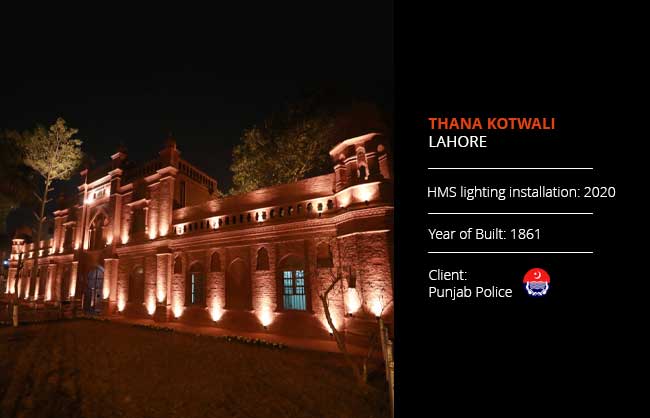
Lahore’s oldest police station – called a kotwaal in Mughal terminology – is located close to the historic Delhi Gate of Lahore. When the British Raj took over the administration from East India Company after the 1857 War of Independence, they constructed this red-brick building in the Mughal and colonial architectural style to house the city’s first police head quarters. With its arched windows and twin octagonal towers, the structure bears resemblance to other 19th century
British era buildings in Lahore such as GPO Lahore.
Month: May 2024
SHEESH MAHAL
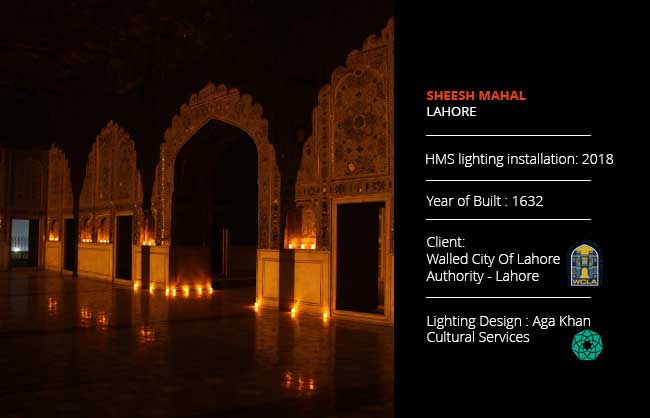
The love story behind the construction of Sheesh Mahal – Palace of Mirrors – is as unique as this ornate white marble pavilion inlaid with intricate mirror work.
Constructed under the supervision of Asif Khan for Emperor Shah Jahan who dedicated it to his wife Mumtaz Mahal, the Sheesh Mahal remains a jewel in
the crown of Lahore’s cultural heritage.
SETHI HOUSE
ROYAL TRAIL
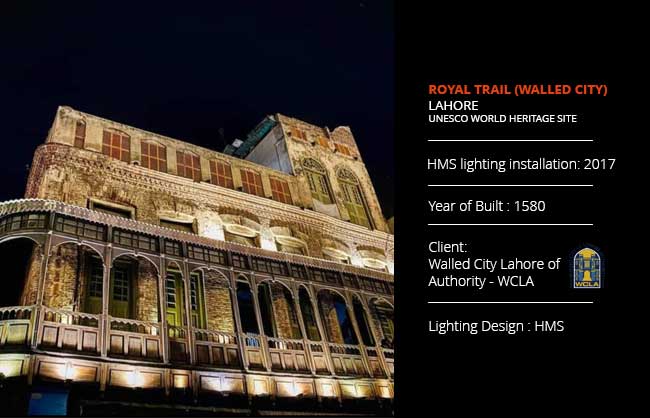
Royal Trail – Shahi Guzargah – starts from Delhi Gate and ends at the Lahore Fort, known primarily because the Mughal Emperors traveled through the same route while
going to Lahore Fort from Delhi. This trail has immense value in terms of the heritage and monuments. The Shahi Guzargah links many of the landmark monuments of the Walled City, including the Delhi Gate, Shahi Hammam, Wazir Khan Mosque, the Begum Shahi Mosque and the Lahore Fort. The same route is enriched with havelis and
heritage homes. The true essence of the Walled City of Lahore is visible through the rich cultural fabric of this trail.
ROYAL KITCHEN
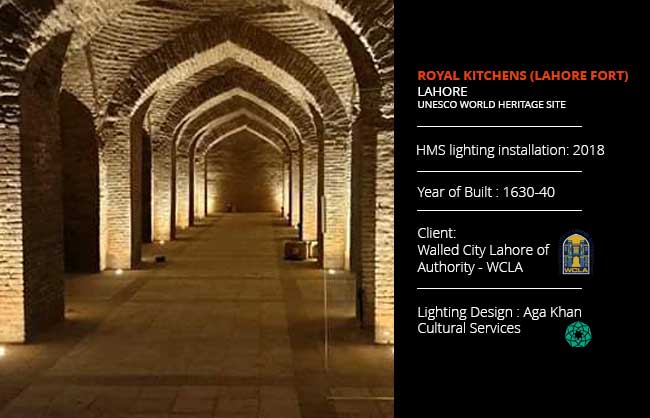
The Royal Kitchens – Shahi Bawarchikhana – was once an aromatic area filled with enticing cuisines cooked for the royals and aristocracy that resided in Lahore Fort. Constructed during the reign of Emperor Shah Jahan, this was the center of all majestic activities with delicious food cooked with spices sourced from Akbari Mandi. It was later damaged during the British Raj after being converted into a stable for horses and interrogation cells & jails. The initial structure was greatly damaged and changed as well till after Pakistan’s independence.
PICTURE WALL
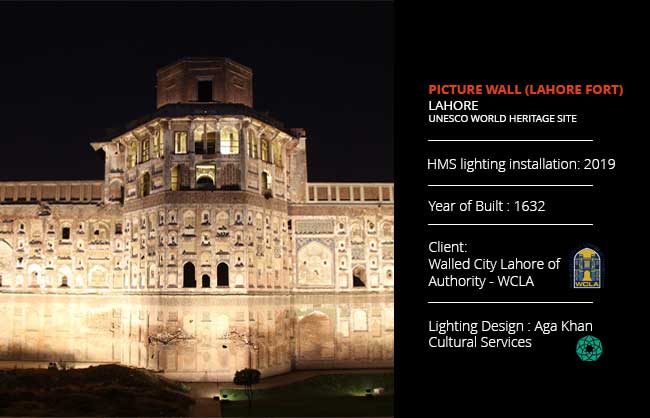
Established as the world’s largest mural Picture Wall, it was exquisitely decorated with glazed tile mosaics, embellished brickwork, filigree work and frescos giving an insight
into the life and entertainment in the royal Mughal courts at the time of Emperor Jahangir and Shah Jahan.
Each individual mosaic gives us an insight into the life and entertainment in the royal courts, such as battle scenes, royal portraits, mythical creatures, dance & music and
geometric patterns. The wall is 450 meters long and 17 meters high located at the entrance of the Lahore Fort opposite Samadhi of Ranjit Singh.
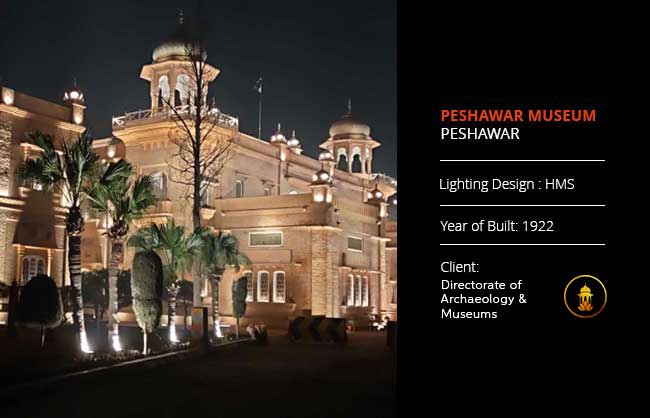
PESHAWAR MUSEUM
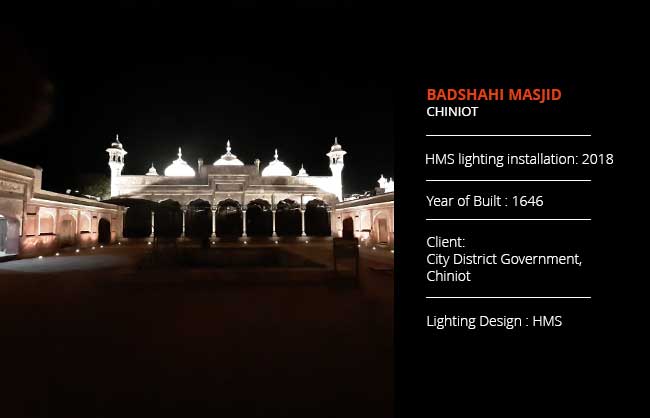
BADSHAHI MOSQUE CHINIOT



MARGALLA SERVICES OFFICERS MESS, DCI ISLAMABAD
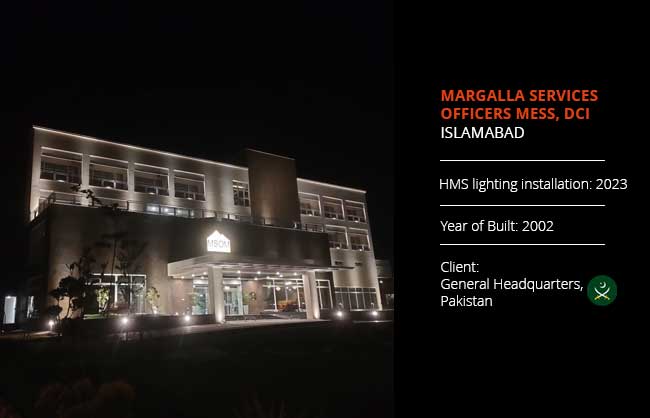
MSOM is a contemporary architectural building constructed in 2022 to serve the Armed Forces of Pakistan and their state
guests providing multidimensional facilities. The building is located in the heart of Islamabad, nestled in Margalla Hills
inside Defence Complex Islamabad
HAZURI BAGH
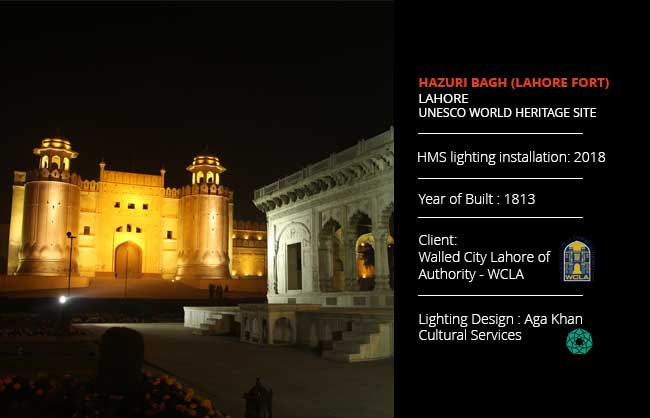
Hazuri Bagh is a garden bounded by the Lahore Fort to the east, Badshahi Mosque to the west, the Samadhi of Ranjit Singh to the north, and the Roshnai Gate to the south. The garden was built during the reign of Maharaja Ranjit Singh, in the style of Mughal gardens. In the center of the garden stands the Hazuri Bagh Baradari, built by the Maharaja in 1818 to celebrate his capture of the Koh-i-Noor diamond from the Afghans.